
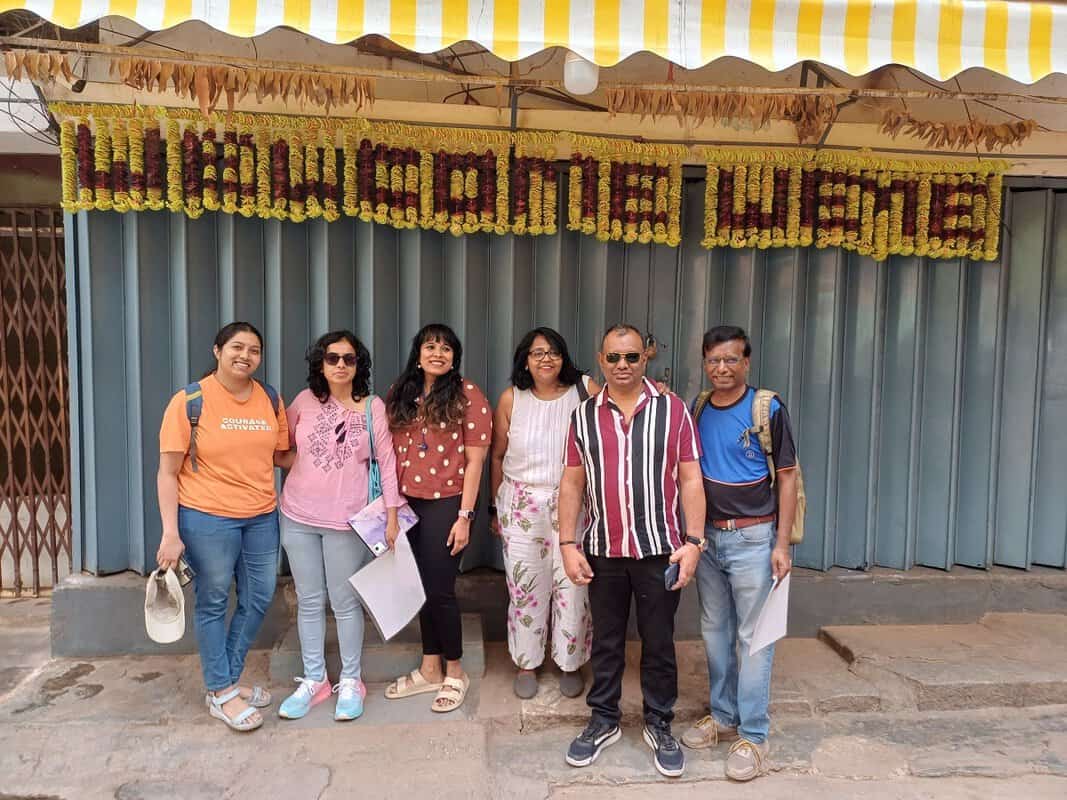
For the past 22 years, Bengaluru has been my home. Every time I say I am from Bengaluru, I say it with pride. Yet the response is often the same. Someone talks about the traffic. Someone calls it a city of pubs and late nights. Others bring up the language debate, politics, or the weather, as though these alone define the city.
Over time, Bengaluru has been reduced to a handful of familiar conversations. Traffic. Startups. Parties. Weather. These topics are repeated so often that they have become the city’s identity. But Bengaluru is also a city with a history that stretches back centuries, and that version of the city often remains unseen.
What surprises me most is that many of us who call ourselves Bengalureans know very little about the city beyond these stereotypes. We live here, study here, work here, and build our lives here. Yet we often remain disconnected from the stories that shaped the city. We know the roads but not the reasons they exist. We know the landmarks but not the people behind them. We hear stories and folklore, but rarely stop to ask where they came from or whether they are supported by historical evidence.
I began to realise this only when I started exploring Bengaluru beyond its surface. Through my work at Bengaluru Prayana and my own enthusiasm for history, I spent more time walking through the city’s older neighbourhoods and learning about their past.
The roads and localities I walked through every day felt familiar. I had crossed them countless times on my way to college, while meeting friends, or during everyday errands. In my mind, I believed I already knew them. But I soon realised that familiarity and understanding are not the same thing.
The moment I began walking through these streets with curiosity and intention, everything started to look different. Places I had passed hundreds of times suddenly revealed layers of history. Buildings I had never paid attention to became silent witnesses to events I had never heard of. Streets transformed from simple routes into stories of people, communities, migration, trade, faith, and culture.
What surprised me was not some dramatic historical discovery. It was the simple realisation of how much I had been walking past without ever truly seeing.
The Pete area, K.R. Market, Cantonment, Fraser Town, Basavanagudi, and several other parts of the city had always been part of my everyday life. These were not new places. They were familiar spaces that I had known for years. Yet the stories hidden within them were completely new to me because they had long been overlooked.
Heritage Walks in Bengaluru – Why are they important?
One of the most valuable lessons I learnt was that much of what we think we know about our city is often based on assumptions or stories passed down through generations. Some of these stories are fascinating and form an important part of local memory. However, not all of them are supported by historical evidence.
This is where heritage walks become important. A good heritage walk does more than simply tell stories. It encourages people to look beyond popular narratives and engage with documented history. Through old newspapers, archival records, maps, inscriptions, photographs, and research, participants are introduced to the evidence that helps us understand the city’s past.
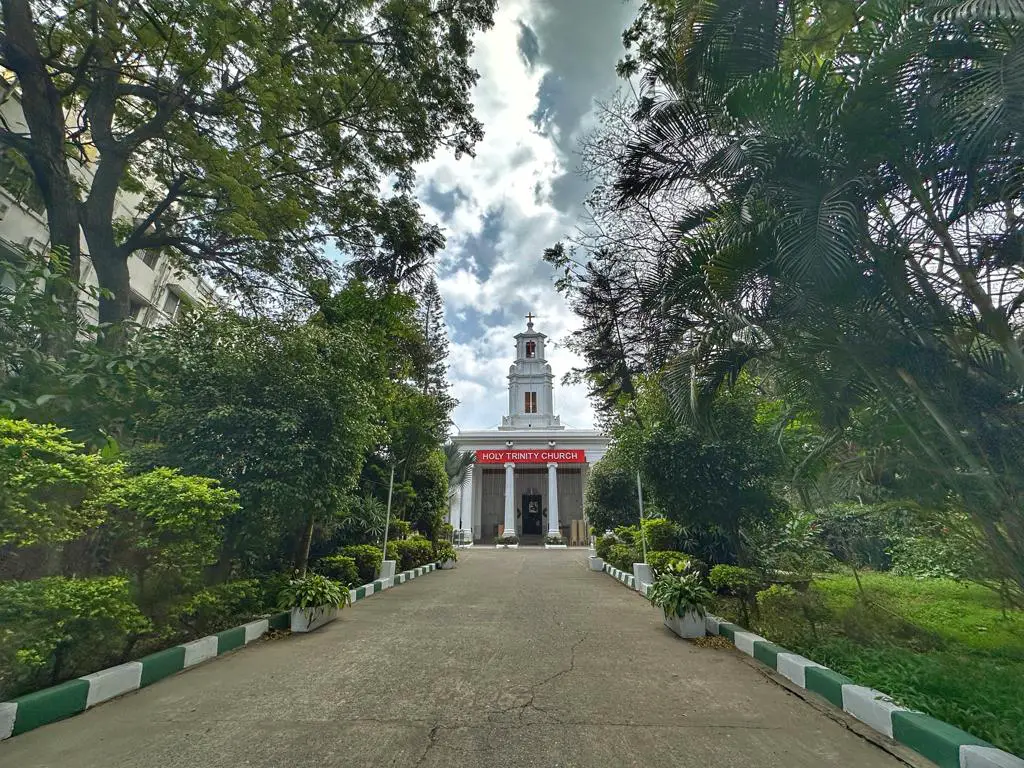
There is something powerful about moving from “this is what people say happened” to “this is what historical records tell us.” It changes the way you look at a place. It creates a deeper and more meaningful connection.
For me, heritage walks became more than a way of learning history. They became a way of connecting with Bengaluru itself.
Many of us already feel a strong attachment to our city. But understanding its history gives that attachment a stronger foundation. When you walk through your city with someone who understands its past, you stop being just a resident and begin to see yourself as part of a much larger story.
You begin to understand why a neighbourhood developed the way it did. You learn how different communities contributed to its growth. You discover how events from centuries ago continue to influence the city we experience today. The city stops feeling like a collection of roads and buildings and starts feeling like a living narrative.
For Bengalureans, this is especially meaningful because many of us already care deeply about the city. What we sometimes lack is an understanding of why certain places matter and how they came to be. Heritage walks provide that context.
They also challenge the common misconception that Bengaluru has little to offer beyond technology and nightlife. Some visitors assume there is not much to see here compared to other historic Indian cities. I have come to believe that the problem is not a lack of history. The problem is that many of our stories remain untold.
Bengaluru does not need artificial attractions. Its stories already exist. They can be found in old markets, temples, churches, mosques, military quarters, lakes, neighbourhoods, and public spaces. The challenge is not the absence of heritage, but our willingness to notice it.
This is why storytelling lies at the heart of every meaningful heritage experience.
Facts alone rarely stay with people. Stories do.
A good storyteller can take a building you have ignored for years and make you look at it differently forever. They connect people to places through context, emotion, and narrative. They help history feel relevant rather than distant.
Storytelling is not simply about sharing dates and names. It is about helping people understand why a place matters and why its story deserves to be remembered.
This becomes even more important today because Bengaluru is changing rapidly. Every year, new buildings appear while older structures disappear. Neighbourhoods evolve, roads expand, populations grow, and infrastructure develops. Growth is necessary for any city. But progress should not come at the cost of forgetting who we are.
This is where heritage tourism plays an important role. Beyond attracting visitors, it creates awareness. When people know the story behind a building, they value it more. When they understand the significance of a neighbourhood, they pay closer attention to what happens to it. Preservation begins with awareness, and awareness begins with connection.
Closing Notes
Not everyone will become a historian. Not everyone will attend heritage walks regularly. But even a single walk can change the way a person sees their city.
It certainly changed the way I see mine.
Today, when I walk through Bengaluru, I still see the traffic, the crowds, and the fast pace of urban life. But I also see the stories hidden beneath them. I see layers of history that existed long before us and will continue long after us.
Bengaluru is not just a city of traffic jams, startups, and weekend plans. It is a city shaped by centuries of people, cultures, communities, and stories. The more I learn about it, the more I realise how much there still is to discover.
Sometimes all it takes is a walk through a familiar street to understand that the city you thought you knew has been waiting to introduce itself to you all along.
