
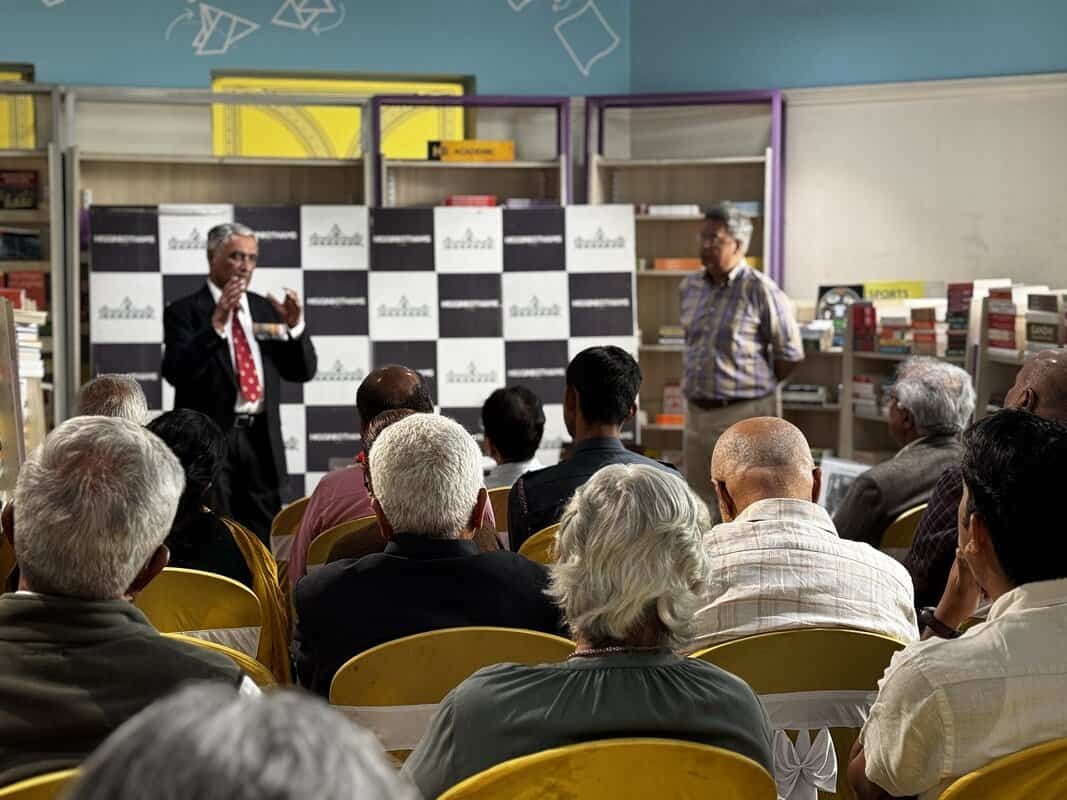
Some evenings do not announce their importance in advance. They reveal it slowly, through attention, detail, and the quiet authority of lived experience. The third edition of Valiant Veterans was one such evening.
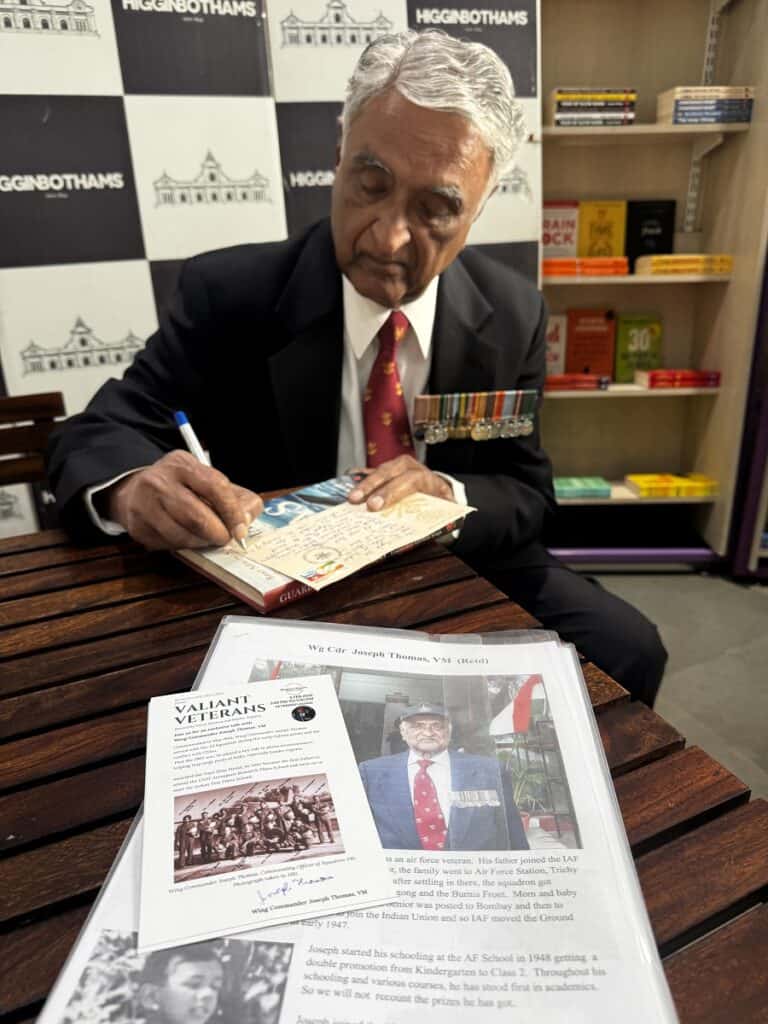
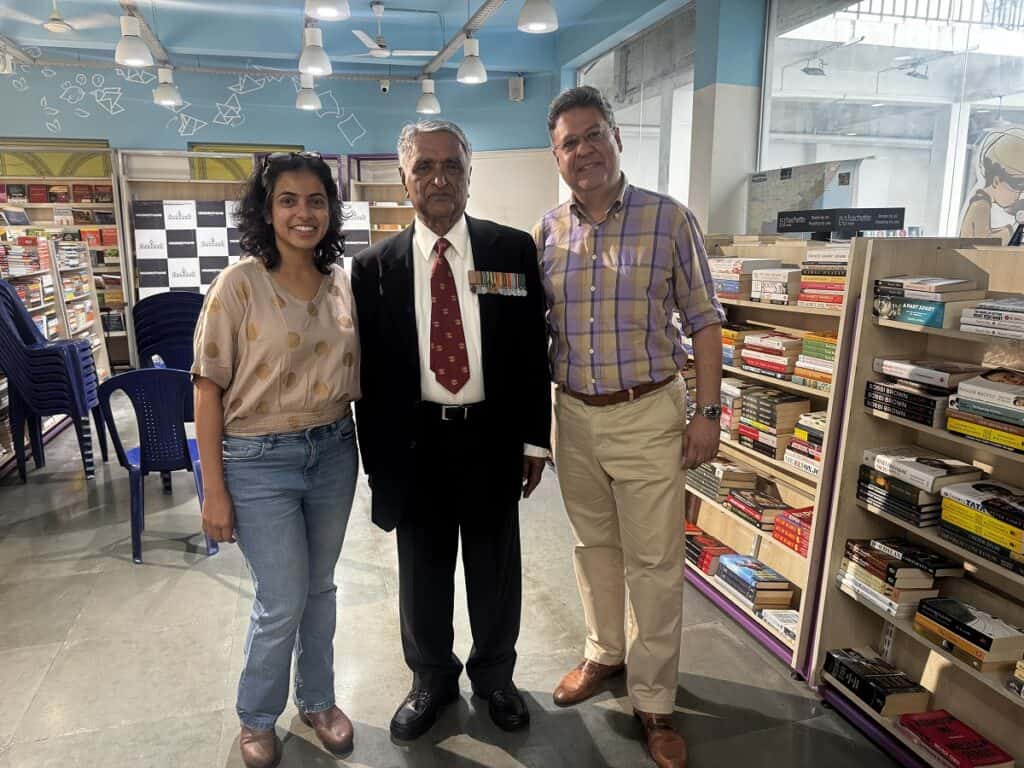
This session featured Wing Commander Joseph Thomas, Vayu Sena Medal (VM), whose career spans some of the most formative decades of Indian military aviation. What unfolded was not a recounting of battles alone, but a layered account of how systems are built, knowledge is created, and responsibility is carried over a lifetime.
Beginning at a Time of Uncertainty
Wing Commander Joseph Thomas was commissioned into the Indian Air Force in May 1962, at a time when the country itself was navigating uncertainty. Soon after joining, he was posted to No. 43 Squadron, arriving in time for the first Galwan action and the conflict with China.
These early years were marked by urgency. The structures we take for granted today were still evolving. Roles were being defined even as they were being executed. Decisions had to be made with limited precedent.
He spoke about this period not as a dramatic chapter, but as a phase that demanded adaptability and clarity. There was no room for hesitation. One learned quickly, or one did not last.
Moving Beyond the Cockpit
Following the 1965 war, his journey took a decisive turn. He moved into photo reconnaissance, a role that required a different kind of precision and patience.
This phase of his career involved mapping large parts of the country, particularly along border regions where information was sparse or outdated. These missions were not visible to the public, but they were foundational. They filled critical gaps in India’s understanding of its own geography.
Maps were not just documents.
They were tools of preparedness.
They shaped future planning.
Listening to him speak about this work made it clear that impact is not always immediate or visible. Sometimes it is embedded quietly into systems that others will rely on later.
Recognition and Advanced Training
His work and capability were recognised when he was awarded the Vayu Sena Medal (VM). Soon after, he was selected as the first Indian to attend the Aerospace Research Pilots Course at the USAF Aerospace Research Pilots School.
This was not merely an individual achievement. It was an opportunity to absorb global thinking, advanced research practices, and experimental flying concepts at a time when such exposure was rare.
He spoke about the intensity of the training, the rigour of testing limits, and the responsibility of bringing that learning back home. There was an implicit understanding that knowledge, once gained, must be shared.
Creating Institutions, Not Just Careers
On returning to India, Wing Commander Joseph Thomas joined the Aircraft and Systems Testing Establishment. What followed was one of the most significant contributions of his career.
He went on to establish the Indian Test Pilots School, making India the fifth country in the world to have such an institution. This was not about individual flying skill. It was about building a system that would outlast any one person.
Starting something from scratch involves uncertainty, resistance, and persistence. He spoke about processes, failures, revisions, and the importance of getting things right rather than getting them done quickly.
This part of the session resonated deeply with the audience. It showed how service can extend beyond operational roles into institution-building that strengthens the future.
A Lifetime Still in Motion
What surprised many in the room was that his work did not end with retirement. Even today, Wing Commander Joseph Thomas continues to be involved in multiple projects.
His engagement with aviation and systems thinking has not slowed. It has simply shifted form. The curiosity remains. The discipline remains. The commitment remains.
This continuity challenged the idea that service has a fixed endpoint. Instead, it presented service as a way of thinking and contributing, regardless of designation.
The Atmosphere in the Room
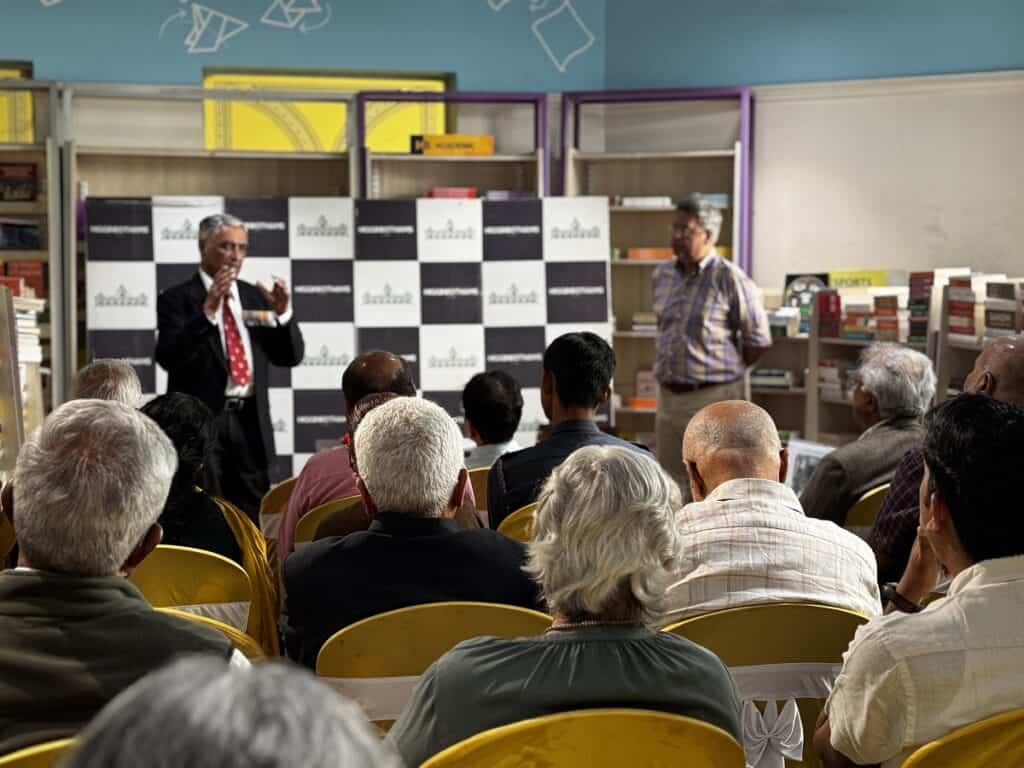
Throughout the session, the audience remained deeply attentive. There were no distractions. Questions, when asked, were thoughtful and measured.
People were not reacting to isolated incidents, but to a larger arc of work that spanned decades. The focus was not on heroism, but on responsibility, consistency, and long-term impact.
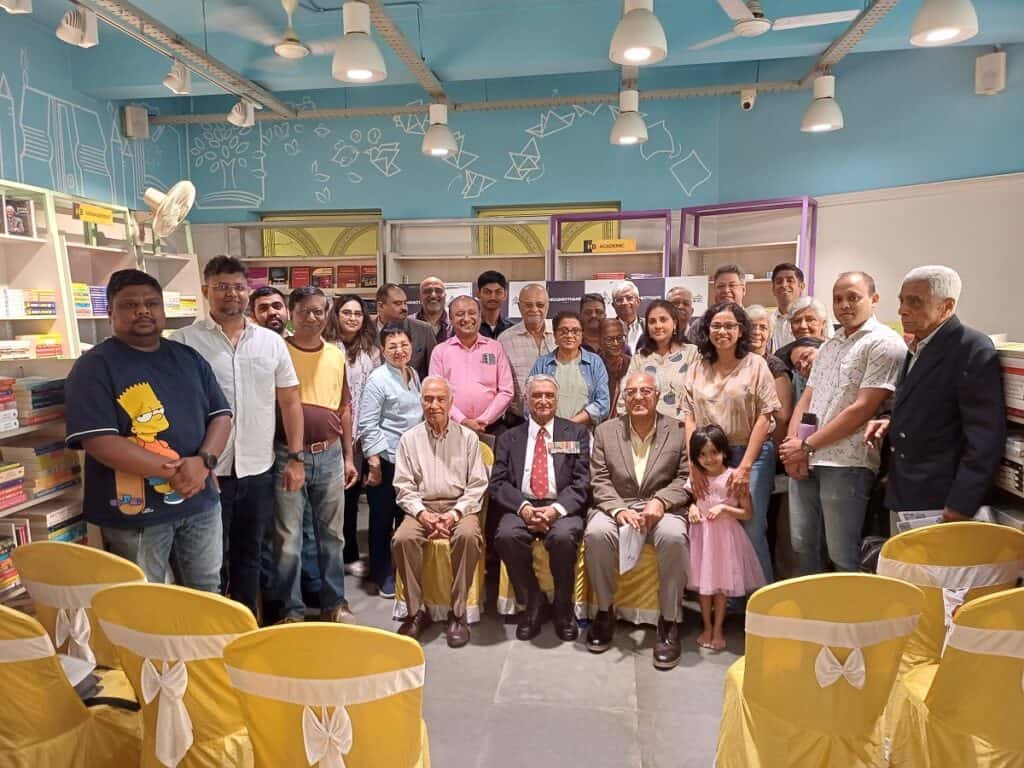
Many stayed back after the session. Conversations continued quietly. It was clear that the evening had left people thinking.
Where This Fits Within Valiant Veterans
Valiant Veterans was created to host conversations exactly like this.
The first edition introduced the power of personal military narratives. The second deepened that understanding through leadership and resilience. This third edition added another dimension, the importance of systems, preparation, and knowledge-building.
Each edition brings a different perspective. Together, they form a broader understanding of service that goes beyond uniformed moments and into lifelong contribution.
Why These Stories Matter Today
In a time of instant opinions and quick summaries, there is value in slowing down and in listening to how decisions are made, how mistakes are corrected, and how institutions are shaped patiently over time.
Wing Commander Joseph Thomas’s story reminded us that progress often happens quietly. That many of the structures we depend on today exist because someone once took the effort to build what did not exist.
That is a lesson worth sitting with.
Looking Ahead
As Valiant Veterans continues, we remain committed to creating space for such conversations. Not to compare stories, but to place them alongside each other, each adding depth and context.
The third edition reinforced our belief that listening is an act of respect. And that, when done well, it strengthens a community’s understanding of its own history.
Explore Previous Valiant Veterans Editions
Valiant Veterans is an ongoing series, with each edition offering a different perspective on service, leadership, and lived experience from the Indian Armed Forces.
If you would like to explore earlier conversations, you can read:
-
Valiant Veterans – Edition 1:
Squadron Leader Pushp Vaid, Vir Chakra, on helicopter operations during the 1971 war and the Meghna Crossing. -
Valiant Veterans – Edition 2:
Wing Commander Bharat Bhushan Soni, Vir Chakra, on training, resilience, and combat flying during the 1971 Indo–Pak War. -
Valiant Veterans – Edition 3
Wing Commander Joseph Thomas, VM
This session highlighted reconnaissance, mapping India’s border regions, test flying, and the creation of the Indian Test Pilots School. - Valiant Veterans – Edition 4:
Rear Admiral Santosh Kumar Gupta, MVC, NM, who commanded INAS 300 during the 1971 war aboard INS Vikrant and was awarded the Maha Vir Chakra.
Each edition adds a new layer to the Valiant Veterans’ journey.
Closing Notes
The evening with Wing Commander Joseph Thomas did not end with applause.
It ended with a thought.
And sometimes, that is the most meaningful outcome of all.
