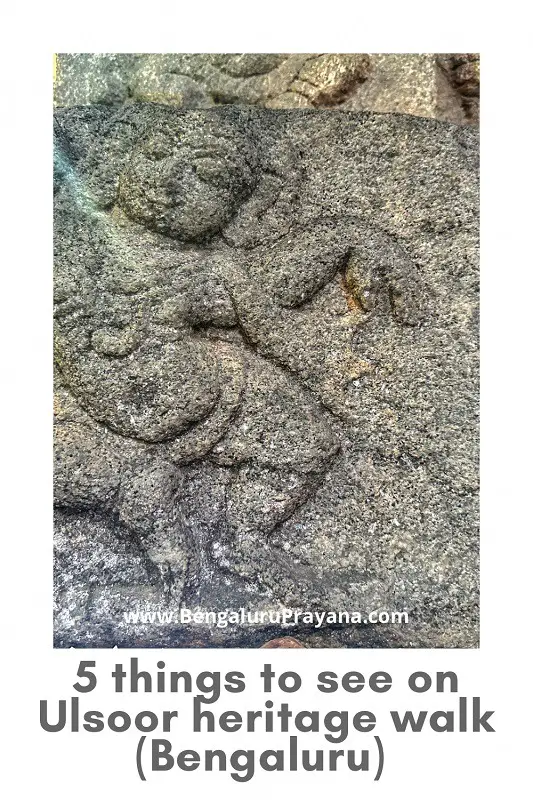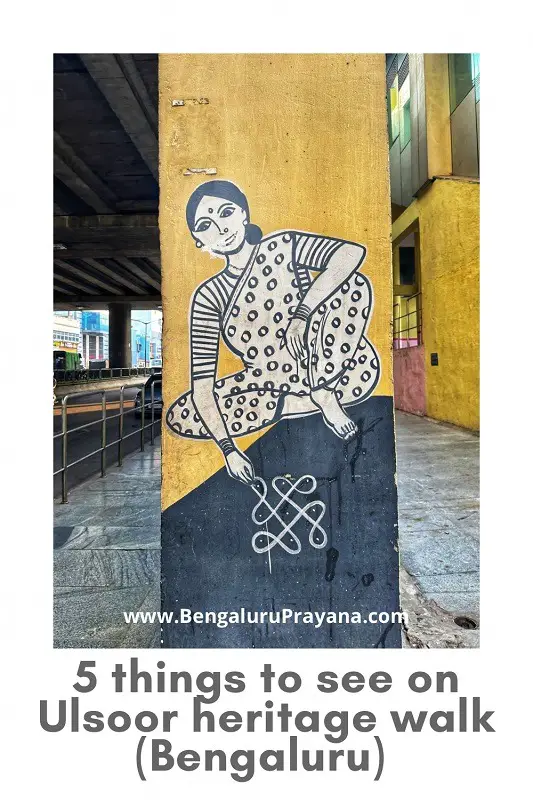
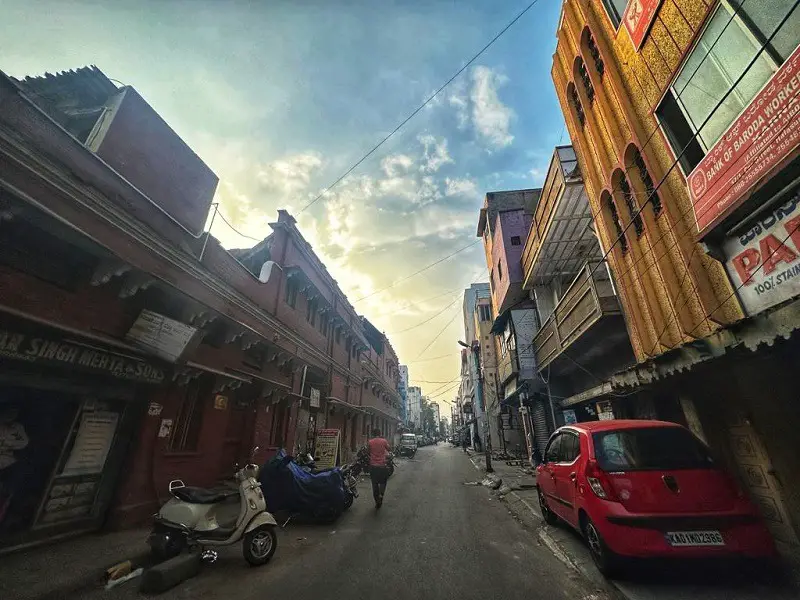
Do you enjoy exploring a neighbourhood on foot? Are you one of those who love heritage and history? Then the Halasuru or Ulsoor heritage walk is for you. With narrow lanes and beautiful old temples, the heritage walk passes through some fantastic and bygone landmarks of Bangalore/Bengaluru.
Bengaluru is one of the most charming cities in India. With so much history and culture, there are many reasons why Bengaluru must be on your travel list.
This article may contain affiliate links. For complete information, please see our affiliate disclaimer here.
Bengaluru Travel Resources
Don’t have the time to read the complete post? Here are some useful links for your bookings:
Cheap Flight Bookings? Use Skyscanner
Good stay and accommodation? Use Agoda or Stay22
Hostels? Use HostelWorld
Comprehensive Travel Insurance? Use SafetyWing
Tours and Activity Bookings? Use Viator, GetYourGuide or TripAdvisor
Useful Blog Posts
Things to Know Before Visiting Bangalore
Discover Kempegowda International Airport
Best Hotels in Bangalore for Family Holidays
Review of Taj Westend Bangalore (5-Star Hotel)
Review of Jayamahal Palace Hotel (4-Star Hotel)
Transport in Bangalore: Getting Around the City
One-Day Itinerary for Bangalore
2 Days in Bangalore
3 Days in Bangalore
5 Days in Bangalore
Best Area to Stay in Bangalore
About Halasuru or Ulsoor
Located in Central Bengaluru, Halasuru or Ulsoor is one of the oldest neighbourhoods in Bengaluru. The area is next to the Mahatma Gandhi (MG) road, famous for its ancient temples and lanes. It is believed that Vijayanagara emperors gifted the area/suburb to Kempe Gowda I, the founder of Bengaluru, in the 16th century.
The name Ulsoor is believed to have come from Halasuru. According to local legends, “Halasuru” means the “village of jackfruit trees,” as the region was once filled with jackfruit orchards. Over time, the British found it hard to pronounce Halasuru, and the name gradually became Ulsoor.
Due to the weather and climate of the Ulsoor suburb, the first British military station was set up here in 1808. The area was divided into two parts depending on whether the British or the locals stayed. All the soldiers and military personnel settled around the area, especially in the Cantonment area. Ulsoor, around Sree Someshwara Swamy Temple, was inhabited by the locals.
How to Get to Ulsoor?
Part of Central Bengaluru, Ulsoor is located next to MG Road, at the end of Trinity Circle. There are many modes of transport in Bangalore.
- Metro – Ulsoor has a metro station of its own. The metro station is called Halasuru and lies on the purple line. The route, timings and fare are on the Namma Metro website. You can purchase a Metro ticket at any Metro station.
- Buses – There are frequent buses, operated by Bengaluru Metropolitan Transport Corporation (BMTC), that connect Ulsoor and other areas in Bengaluru.
History of Ulsoor or Halasuru
Ulsoor, one of the oldest neighbourhoods in Bangalore, carries stories that go back several centuries. It lies on the eastern side of the city, near MG Road, and is known for its temple heritage, narrow streets, and the large Ulsoor Lake.
The Chola Connection
Ulsoor’s recorded history begins with the Chola dynasty. Inscriptions from the 10th and 11th centuries found around Someshwara Temple show that the area was an active settlement during the Chola period. The temple itself is one of the oldest in Bangalore, dedicated to Lord Shiva, and was built in the typical Dravidian architectural style. The Cholas developed the early village around the temple, which later expanded under the Vijayanagara Empire.
The Vijayanagara Period
During the reign of Kempegowda I, the founder of Bangalore in the 16th century, Ulsoor was part of his territory. Kempegowda is believed to have made several additions to the Someshwara Temple. He also built a gopuram (tower) and established a market around the temple, turning Ulsoor into an important centre of trade and worship.
The British or Colonial Era
When the British arrived in Bangalore in the early 19th century, they made Ulsoor part of the Cantonment area. It became one of the earliest Indian settlements near the British quarters. The British developed Ulsoor Lake as a water source for the cantonment and used it for boating and recreational activities. Even today, the lake remains a prominent landmark with its small islands and boating facilities.
The Military Link
Ulsoor also has a long-standing association with the Indian Army. The Madras Engineer Group (MEG), also known as the Sappers, established their headquarters here in 1834. The regiment continues to be based in Ulsoor, giving the area a strong military presence. The MEG Museum inside the campus displays the regiment’s history and contribution to the armed forces.
Ulsoor Today
Modern Ulsoor blends old traditions with urban life. The Someshwara Temple continues to be a centre of devotion, especially during festivals like Maha Shivaratri. The area’s lanes still reflect an old-world charm with heritage homes, while MG Road and commercial establishments nearby show the modern face of Bangalore.
Ulsoor Lake is now a public space for walks, photography, and evening relaxation. Around the lake and temple, the area has retained its cultural identity, making it one of the few neighbourhoods in Bangalore that still reflects the city’s layered past — from the Chola period to the British era.
5 Things to See on Halasuru/Ulsoor Heritage Walk
Ulsoor Heritage Walk is a stunning and remarkable walk in Bengaluru. It showcases how Ulsoor has evolved from a traditional to a modern area. The lanes are still narrow, and the houses remind us of the past days. It is a short walk of around 3 to 4 kilometres, starting from Ulsoor Metro Station and ending at Ulsoor Lake. There are many stories to be heard and many things to be seen during this heritage walk. However, the top 5 things you will see on Ulsoor Heritage Walk are documented below.
If you wish to do a guided walk to hear the history and stories, contact us at info@bengaluruprayana.com or bengaluruprayana@gmail.com.
Old Houses in Ulsoor
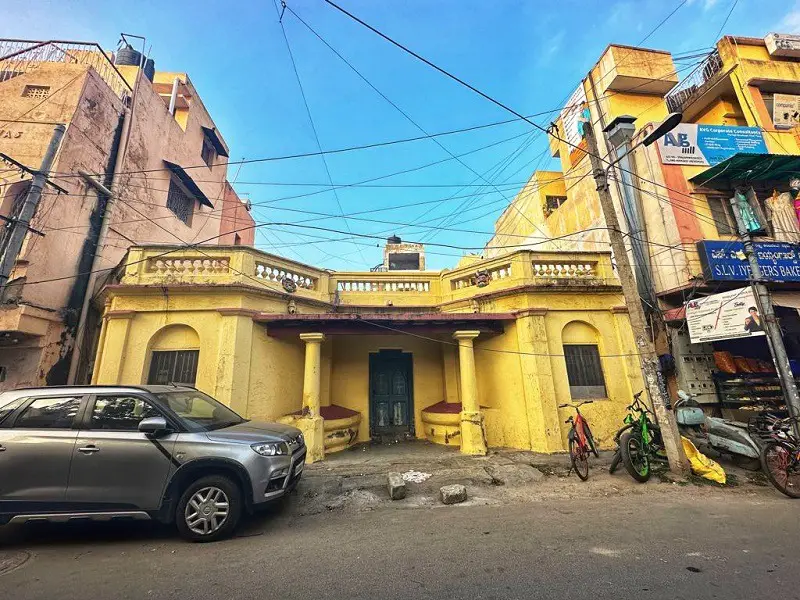
Because of their modern adaptation and growing population, you can still find ancient houses in Ulsoor, now a rare sight in Bengaluru. The ancient houses in the suburb date back more than one hundred years. These houses remind the passersby of the classical Tamil architecture. One of the prominent features of Tamil architecture is the sit-out area or the verandah.
- As these are someone’s homes, be mindful and respect the privacy while taking pictures and observing the homes.
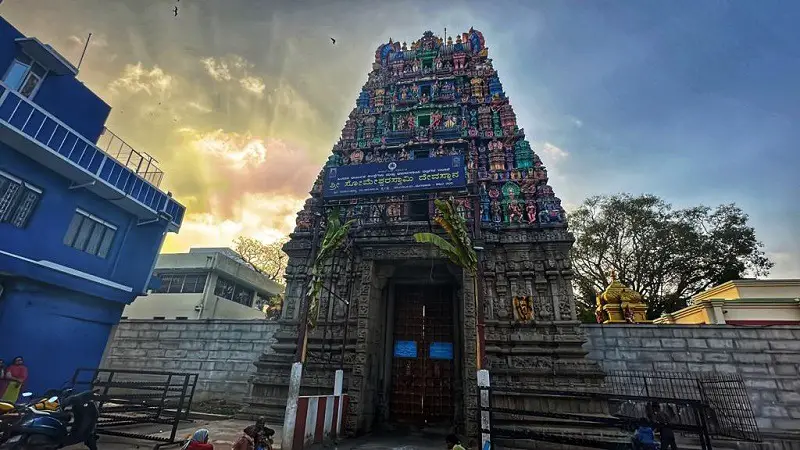
Sree Someshwara Swamy Temple
Dating back to the Chola period, Sree Someshwara Swamy temple is a Hindu temple and one of the historical temples in Bengaluru. Established in the 3rd century, the Chola dynasty was a Tamil empire in the southern part of India. The dynasty was at its peak during the mid-9th century. Dedicated to Lord Shiva, the Sree Someshwara Swamy temple was then modified with additions of architectural structures by the Vijayanagara Empire.
- Temple timings: 6:30 AM to 12:30 PM and 5:30 PM to 8:30 PM daily.
- Entrance fee: No entrance fee.
- Photographs are allowed only on the exteriors of the temple.
- The best time to visit the temple is in the morning, as there is less of a crowd.
- As this is a religious place, wear appropriate clothes.
Trinity Church
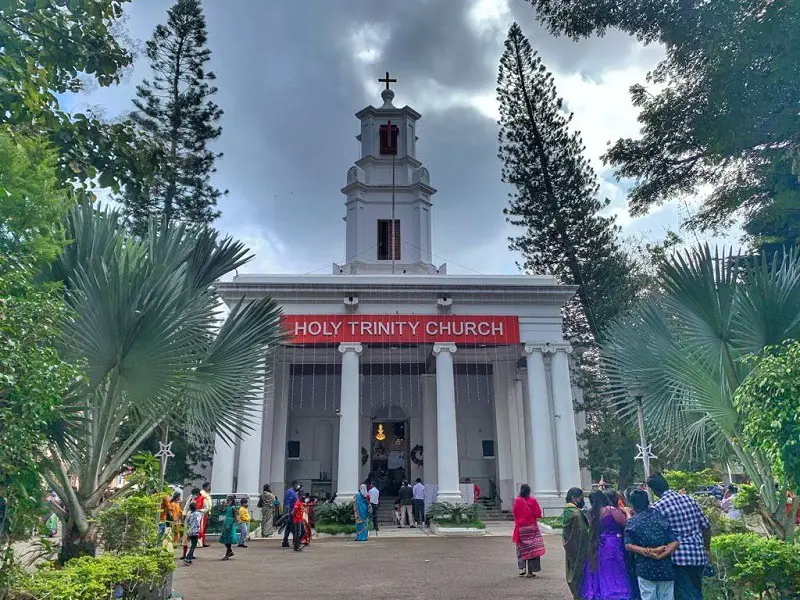
Built in 1851, Holy Trinity Church is considered the most prominent military church in southern India. One of the churches on MG Road was constructed in the English Renaissance style for the British Regiment. Initially called Holy Trinity Garrison Pastorate, the church can currently accommodate 700 people, and some of the structures present in the church were commissioned and carved in England.
- Church timings: 6:30 AM to 6 PM every day. On public holidays, the church opens at 9 AM.
- Entrance fee: No entrance fee.
Ulsoor Lake
One of the most popular lakes to visit in Bengaluru is Ulsoor Lake. Spreading across 123 acres, Ulsoor Lake is a man-made lake with a few islands. The lake was created by Sir Lewin Bentham Bowring, a British Indian civil servant who served as the Chief Commissioner of Mysore during British India.
- Lake timings: 6 AM to 8 PM every day.
- Entrance fee: No entrance fee.
Kempegowda Tower
Marking the four corners or the jurisdiction towers of Bengaluru city, Kempe Gowda II built four watch towers, called the Kempegowda towers. Even though Bengaluru has grown and expanded way beyond these boundaries, these towers are currently located at:
- Mekhri circle.
- Lalbagh Botanical Garden.
- Gavipuram.
- Ulsoor.
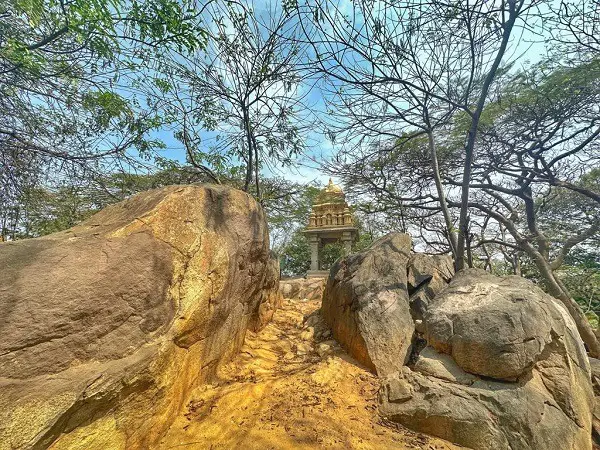
Located on the Madras Sappers (MEG) campus, the Kempegowda Tower in Ulsoor is along the banks of Ulsoor Lake. It is situated on a hill and is visible from Ulsoor Lake. Unfortunately, you cannot go closer to the Kempegowda Tower in Ulsoor as the campus is beyond the limits for commoners. But on 27 June, marked as Kempegowda I’s birth anniversary, MEG allows the visitors to visit the Kempegowda tower.
Closing Notes
I love walking through Ulsoor and discovering unexplored and hidden gems. I saw many things for the first time, and the Ulsoor heritage walk was a way to explore the neighbourhood of Ulsoor. It is also a way to uncover the tales.
How Can You Support Me?
You know I love coffee, so you can buy me a coffee – Buy Me Coffee!
If you enjoyed and liked this article, comment, tweet, and share this post.
Do you have a question or a suggestion? Or want to know more information? Write to me at bengaluruprayana@gmail.com.
Subscribe to My Newsletter
PIN for later reference